Planning
Do you need a safari travel agent?
For a city break, almost certainly not. For a first safari across two or three parks, usually yes, and the reasons are specific enough to check.
Most travel is now easy to book alone. Flights, hotels and trains in Paris or Tokyo are standard products sold through sites built for exactly that, and an agent adds little.
A safari in Kenya, Tanzania, Rwanda or Uganda is several small, scarce, dependent bookings: a camp with nine tents, a light aircraft timed to that camp, a park fee that changes with the month, sometimes a permit with a fixed daily quota. When one moves, the others have to move with it, and doing that by email from a time zone seven or eight hours behind is where most self-booked safaris come unstuck.
When you can book it yourself
Some safaris need no specialist, and we would rather say so here than lose your trust on page two.
- A self-drive trip on good roads with public rest camps you can book direct.
- One fixed-date group tour where a single operator handles everything from airport to airport, and you have checked their reviews somewhere other than their own site.
- A return visit to a camp you already know, with a guide you already trust.
If one of those is your trip, write to the camp or the operator directly. You will pay the same and lose nothing.
Going only to Kenya? Kenya Safari Planner’s version of this guide covers the Mara conservancies, seasonal park fees and Wilson Airport flights in detail.
Why a safari is harder to book than a city
The best-placed camps in the Mara conservancies have six to twelve tents. In July to October, when the migration is in Kenya, they fill six to twelve months out, and the light aircraft seats into the nearest airstrip go with them.
Fees move with the calendar too. A non-resident adult pays US$100 a day to enter the Maasai Mara reserve from January to June and US$200 from July to December, and a reserve ticket covers twelve hours, so leaving after 10am on your last morning costs another full day. None of that appears on a booking site, and all of it changes what the right itinerary is.
What a specialist in East Africa handles
Entry rules and paperwork
East African entry rules have changed several times since 2024. Kenya replaced visas with an Electronic Travel Authorisation (eTA) that every visitor needs, infants included, and airlines check for approval at check-in, so a missing eTA stops you at your home airport. Tanzania runs its own e-visa. Kenya, Uganda and Rwanda also share an East Africa Tourist Visa for trips that combine those three.
A specialist tells you which documents your route needs and in what order, and points you to the official government portals rather than the third-party sites that add a fee for filling in the same form.
Permits and camp reservations
Some experiences are capped by permit. Mountain gorilla trekking is the clearest case: Rwanda charges US$1,500 per person for one hour with a habituated family, Uganda charges less, and both issue a fixed number each day. Most permits cannot be refunded or moved.
A specialist secures the scarce piece first and builds the rest of the trip around it, which is the reverse of how most people plan alone.
Bush flights and transfers
Many camps are reached by light aircraft landing on dirt airstrips. The usual allowance is 15kg (33lb) per person, carry-on and camera gear included, in a soft bag with no frame or wheels so it fits the hold. Schedules are built around camp arrivals and can shift with weather.
A specialist books the flights that match your camps, tells you the luggage rule before you buy a bag, and rebooks you if a flight changes.
Guides and camps
The guide decides more about a safari than the room does. A strong guide reads behaviour, positions the vehicle for the light, and takes you away from a sighting with twelve vehicles on it. Agencies that send people to the same camps every month know which guides are good this season, which camps have changed hands, and when a conservancy with off-road driving and night drives is worth more than a reserve lodge.
Health preparation
No travel agent should give you medical advice, and we do not. What a specialist should do is get you to a travel clinic six to eight weeks before you fly, with the right questions:
- Does my route, including airport connections, require a yellow fever certificate?
- Which malaria prevention suits the areas and the month I am travelling in?
- Which routine and travel vaccines should be up to date?
- What should I carry, given the camps can be hours from a hospital?
The CDC’s destination pages are a good place to start for US travellers, and your own government’s travel health service if you live elsewhere.
Help in your time zone while you travel
Nairobi runs on East Africa Time, three hours ahead of London in winter and seven or eight ahead of New York. When something goes wrong on safari (a delayed flight, a flooded road, a missed connection, someone unwell) it happens in East African daylight, which is the middle of the night for an agent in North America.
A team based in the region can phone the camp, the airline or the driver directly and sort it while you are still on the airstrip. Take travel insurance that covers medical evacuation from remote areas as well; on a safari that is not a formality.
A home-country agent or a specialist on the ground
| General agent at home | Specialist based in East Africa | |
|---|---|---|
| Knowledge of camps | Often from brochures and an occasional visit | Visits and books the same camps every month |
| Time zone during your trip | Seven or eight hours behind, from North America | Yours |
| Who fixes a problem | Calls a local operator, who then fixes it | Fixes it |
| Companies between you and the camp | Usually two or three | Usually one |
Plenty of good home-country agents book safaris through a local operator, and that can work well. Ask them which operator they use, and you have found the people doing the work.
What it costs you
Usually nothing extra. Camps hold rate parity, so a given tent on a given night costs the same whether you book through an agency or write to the camp yourself, and the agency’s margin comes from trade rates rather than a fee added on top. Some agencies do charge a planning fee; ask.
Trips planned through this desk start at about US$800 per person per night, fully inclusive: the camp, meals, drinks, game drives, guide, and park or conservancy fees. Below that, booking a lodge directly is often the better route, and the costs page shows what each level buys.
How to choose one
- Which company holds your booking and your money? Get the registered company name in writing, and make sure it is the one on the invoice.
- Have they been to the camps they are recommending, and when?
- Who do you call during the trip, and at what hours? Get the answer in writing.
- How is your money protected, and what are the cancellation terms for each part, permits included?
- Will they tell you a plan does not work? An agency that has never talked a client out of a rushed itinerary is selling, not planning.
How this desk works
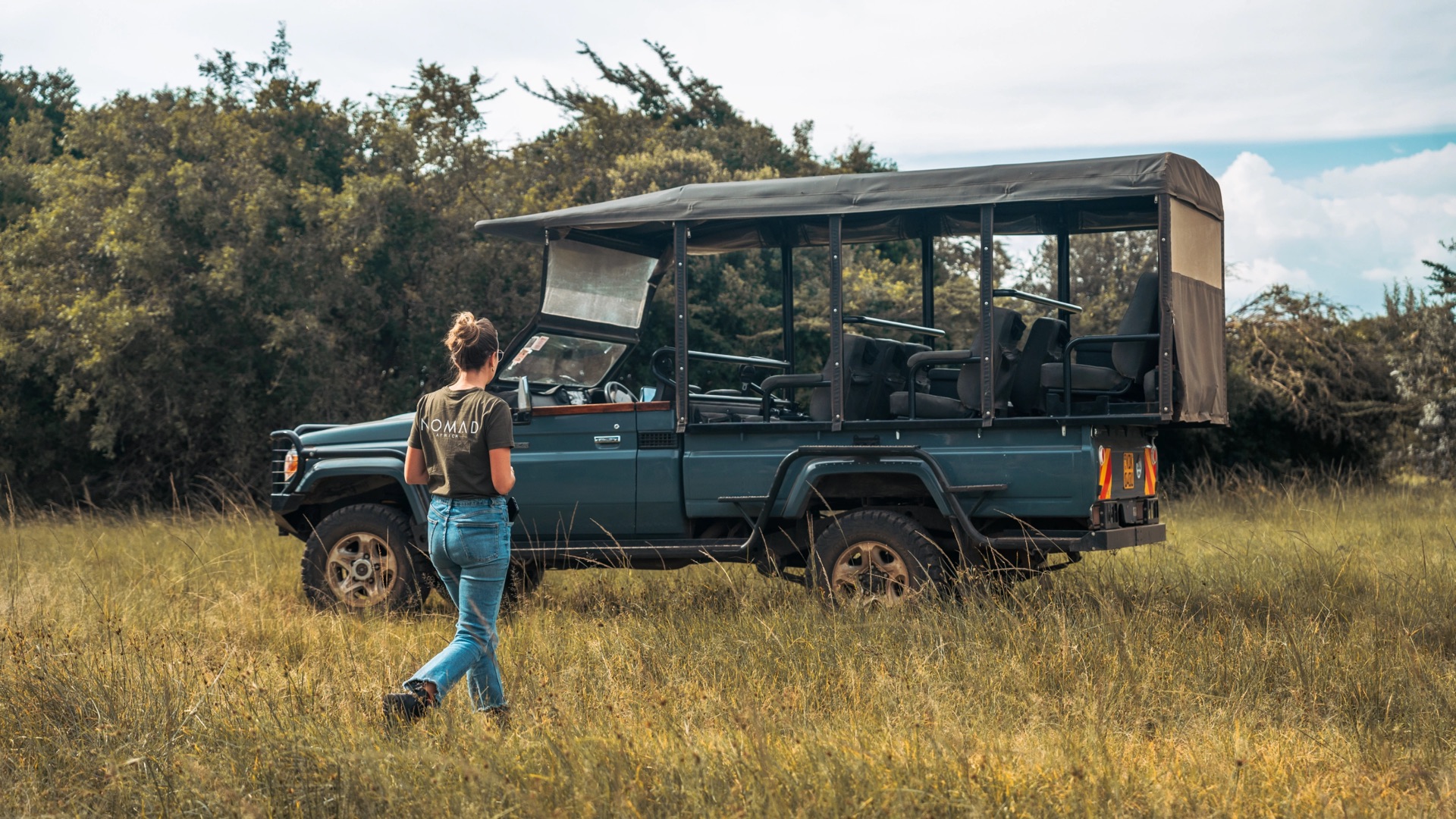
Africa Safari Desk is a publisher, not a travel agent. When you send an enquiry it goes to Nomad Africa, our partner travel agency in Nairobi, who plan in Kenya, Tanzania, Rwanda, Uganda, Botswana and Zanzibar. They build and price the itinerary, hold the bookings, take the payments and look after you on the ground. The arrangement in full, including how we are paid, is on its own page.
Quick answers
Common questions about safari agents
Do I need a travel agent to go on safari in Kenya or Tanzania?
It is not a legal requirement. Most first-time visitors still use a licensed safari operator, because camps, park fees, light aircraft and guides have to be booked together and most of them are not sold on general booking sites.
Is it cheaper to book a safari myself?
Rarely, at the same camps. Rate parity means a camp charges the same nightly rate either way, and an agency can often get availability a private traveller cannot. Compare itemised quotes, not headline prices.
How far ahead should I book a safari?
Six to twelve months for July to October in Kenya, for Christmas and New Year, and for gorilla permits. Three to four months is usually enough for the shoulder months.
Do I need a visa for an East African safari?
Almost always you need some form of entry authorisation, even where a country describes itself as visa-free. Kenya requires an eTA for every visitor. Check each country’s official portal for your passport before you book flights.
What happens if something goes wrong during the trip?
With a team on the ground you call one local number, and they deal with the camp, airline or driver directly in your time zone. Carry insurance that covers medical evacuation as well.
The desk
Not sure whether you need help?
Tell us where you are thinking of going, roughly when, and roughly what per person per night. If the trip is simple enough to book yourself, the reply will say so.
- A reply from a person within 24 hours
- Named camps and an itemised price
- Nothing to pay, and no obligation
Who answers
Nomad Africa, our partner travel agency in Nairobi, builds and prices every itinerary we send. You deal with one team, on the ground, for the whole trip.
Founded in 2017 as East Africa’s only dedicated travel magazine, Nomad still publishes, so the people planning your trip are the ones who write about these places for a living.
Get your tailored itinerary and quote
Our Africa specialist replies within 24 hours with a costed plan built around your dates.
Indicative 2026/27 rates. Your quote confirms exact pricing for your dates.